
How to Paint a Basement Ceiling Black
To paint a basement ceiling black, clear the room, cover everything that stays, and spray the joists, subfloor, pipes and ducts from several angles with a flat black paint. The painting goes quickly. The prep is where the job is won or lost.
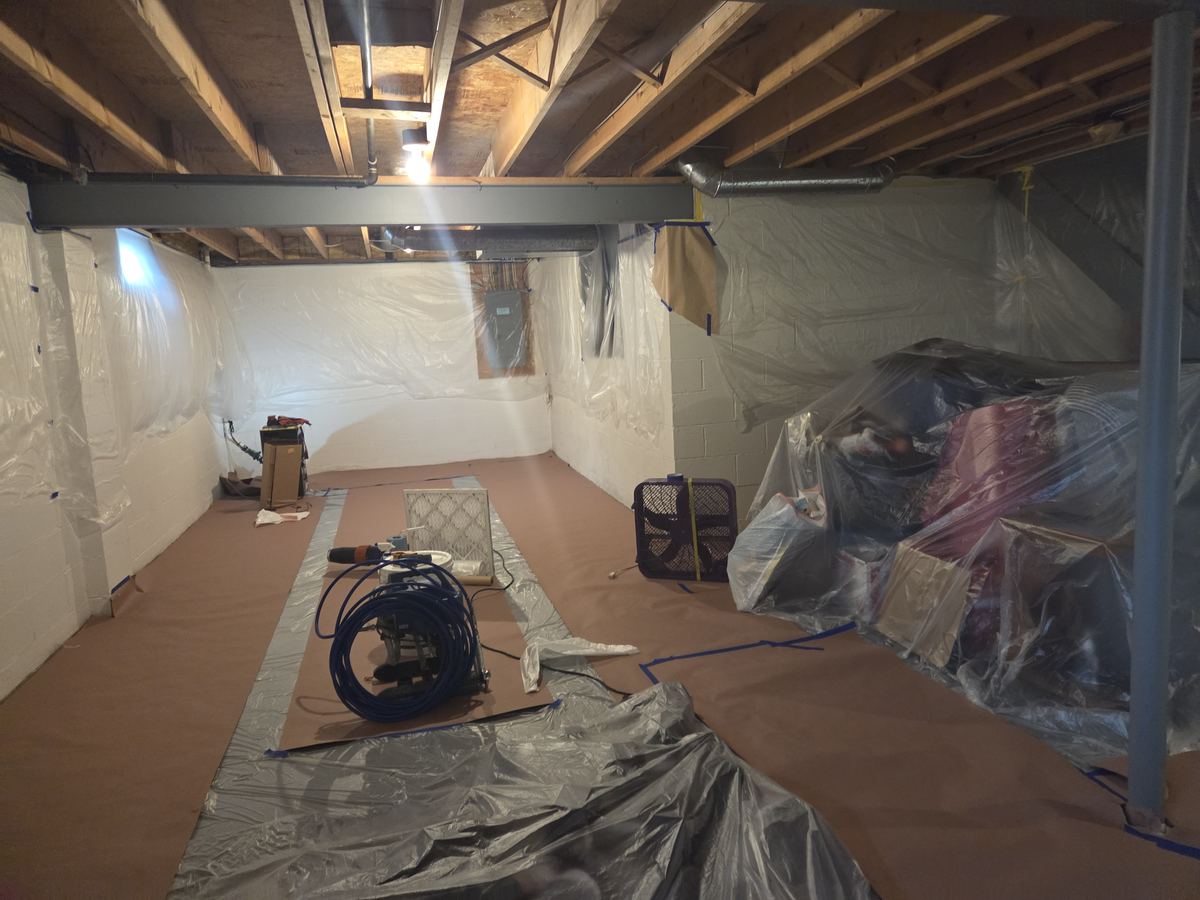
Before You Start: Three Safety Checks
- Old paint. Homes built before 1978 may have lead paint. Don't sand or scrape until you know what's there.
- Old pipe wrap. Older pipe and duct insulation can contain asbestos. Don't disturb it. Have it tested first.
- Moisture. If anything is dripping or moldy, fix the cause first. Paint won't solve it.
What You'll Need
- An airless paint sprayer, plus a brush for touch-ups
- Flat black paint made for the job (see the best paint for a basement ceiling)
- Plastic sheeting, painter's tape and floor paper
- A respirator rated for paint spray, goggles and a hood
- A work light, since it's easy to miss spots on a dark ceiling
What Never to Paint
- Smoke and carbon monoxide alarms
- Fire sprinkler heads
- Furnace and water heater flue pipes, which get hot
- Electrical panel labels and the inside of the panel
- Valve tags, gas line labels and shutoff markings
- Light bulbs, sockets and anything with a moving part
Step by Step
- Empty the room. Move out everything you can. What stays gets covered.
- Clean the ceiling. Vacuum dust and cobwebs off the joists. Paint won't stick to dust.
- Tidy up. Remove dead wires and old nails. Bundle what's left, and label shutoffs while you can still see them.
- Cover everything. Plastic goes on the walls from the ceiling down, and paper or plastic on the floor. Overspray travels farther than you'd think.
- Ventilate. Open what you can, and turn the furnace off while spraying so overspray isn't pulled through the system.
- Spray the hard parts first. Work the sides of the joists, then pipes and ducts, then the subfloor above.
- Spray from the other direction. A second pass from the opposite angle catches what the first one couldn't reach.
- Check with a light. Look up from several spots, and touch up with a brush.
- Pull the coverings. Do it carefully, once the paint has dried as the label directs.
Mistakes That Make It Harder
- Too little prep. Fine black mist on your walls is much harder to fix than plastic is to hang.
- Spraying from one direction. You'll see every missed joist side when you walk the other way.
- Forgetting the lights. A black ceiling takes in light, so plan your lighting. Here are some exposed ceiling lighting ideas.
DIY or Hire It Out?
It's a doable project, but it's messy, physical work, and a sprayer has a learning curve. If you'd rather skip the hood and the overspray, this is what we do in the Columbus area. See what the finished result looks like.
Common Questions
Should I spray or roll a basement ceiling?
Spraying is the practical way to cover an exposed ceiling, because a roller can't get into the gaps around joists, pipes and wires. Expect to use a brush for touch-ups.
How many coats does a black basement ceiling need?
Bare wood soaks up paint, so plan on at least two passes, spraying from different angles to reach every side of the joists. The product label is the final word.
Do I need primer?
Check the paint's label. Stained or very dry wood often benefits from a stain-blocking primer first.
Can I paint over wires and pipes?
Many people spray cold water pipes and ordinary cables along with the ceiling, but keep paint off anything listed in the do-not-paint section of this guide, and check with a licensed electrician or your local inspector if you're unsure.
More Basement Ceiling Guides
- Basement Ceiling Ideas: 10 Options From Cheap to Custom
- The Best Paint for a Basement Ceiling
- Black vs. White Basement Ceiling: Which Is Better?
- Exposed Basement Ceiling Lighting Ideas
- What Does It Cost to Paint a Basement Ceiling Black?
- Black Basement Ceiling: Pros and Cons to Know First
- Low Basement Ceiling Ideas That Keep Your Headroom